IFRS 9 expected credit loss
IFRS 9 ECL calculation, audit-ready.
Expected credit loss models and calculations for lenders and businesses with receivables.
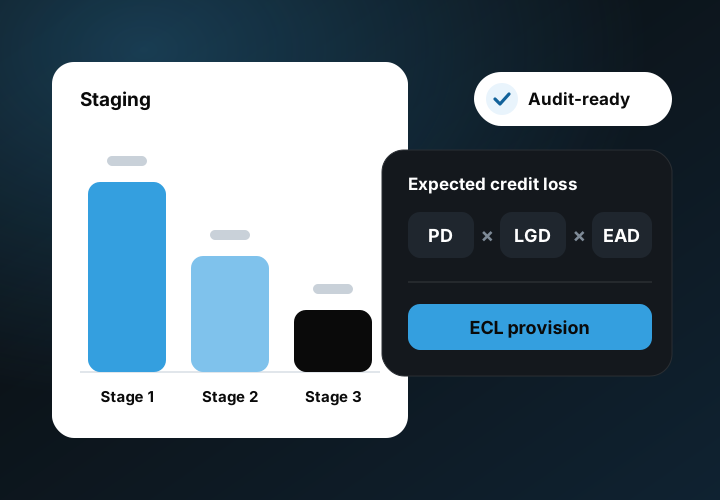
What you get
Everything covered.
Staging
Stage 1, 2 and 3 classification.
PD, LGD and EAD
Assumptions built on your data.
Provision matrix
The simplified approach for trade receivables.
Forward-looking
Economic scenarios applied.
ECL model
A model you can rerun every reporting date.
Audit-ready workings
Documented for your auditors.
Try it
ECL provision matrix calculator.
Enter your receivables by age and a loss rate for each. The expected credit loss updates as you type.
| Age of debt | Balance | Loss rate % | ECL | Remove |
|---|---|---|---|---|
| Total | 880,000 | 36,500 |
The starting figures are an illustration. Replace them with your own balances and loss rates. The calculator applies the rates you enter; it does not work them out for you.
Best for
Banks, lenders and businesses with significant receivables provisioning under IFRS 9.
Questions
Good to know.
What is expected credit loss (ECL)?
The loss a lender or business expects on its loans or receivables. IFRS 9 requires a provision for it.
Do businesses outside banking need an ECL calculation?
Yes. Any business with trade receivables that reports under IFRS must calculate ECL, usually with a provision matrix.
How much does it cost?
Fees are fixed and agreed up front. You get a written proposal after a free 30-minute consultation.
Do you work with clients outside Pakistan?
Yes. We work remotely with businesses in any country, by video call and online.
More services